Aucun résultat ne correspond à votre mot-clé.
Contenu

Vous vous êtes déconnecté avec succès.


Prise en charge des plaies
Les plaies ouvertes comportent un risque important d’infections bactériennes graves, lesquelles peuvent causer des plaies chroniques, une invalidité à long terme, et même la mort. Il est donc essentiel d’assurer rapidement les soins appropriés, comme le nettoyage, le débridement et la prévention des infections, pour prévenir les complications et favoriser la cicatrisation1.
Des soins des plaies efficaces
Les plaies chroniques imposent une lourde charge à l’organisme et affaiblissent le système immunitaire. Lorsque des bactéries pénètrent dans une plaie, une infection peut survenir, entraînant une nécrose des tissus et, parfois, une septicémie potentiellement mortelle.2 Des soins des plaies efficaces s’avèrent donc essentiels pour améliorer la qualité de vie des patients et réduire la pression sur le système de santé.3

Agir sur les causes de l’infection pour favoriser une cicatrisation durable
B. Braun propose une gamme de solutions conçues pour prévenir les infections, prendre en charge les plaies chroniques et traiter les brûlures.
75 - 0%
des plaies de la peau et des tissus mous sont infectées par un biofilm4
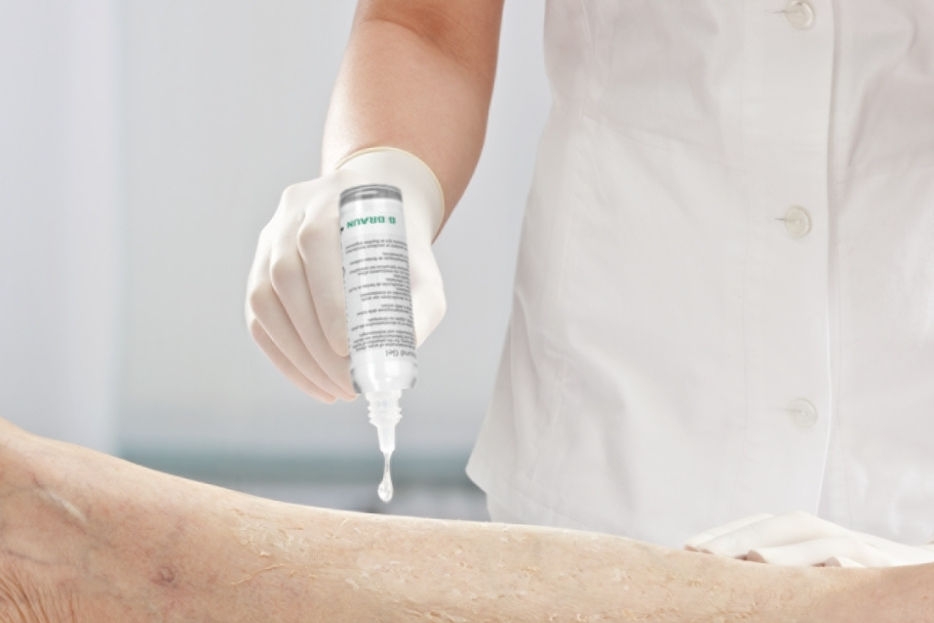
Un biofilm est une couche persistante de bactéries qui recouvre les plaies, freine la cicatrisation et favorise la chronicité. Les infections chroniques des plaies sont étroitement liées à des risques importants pour la santé et peuvent mettre la vie du patient en danger. Il est donc essentiel d’utiliser des produits à forte action antimicrobienne, capables d’éliminer efficacement le biofilm4.
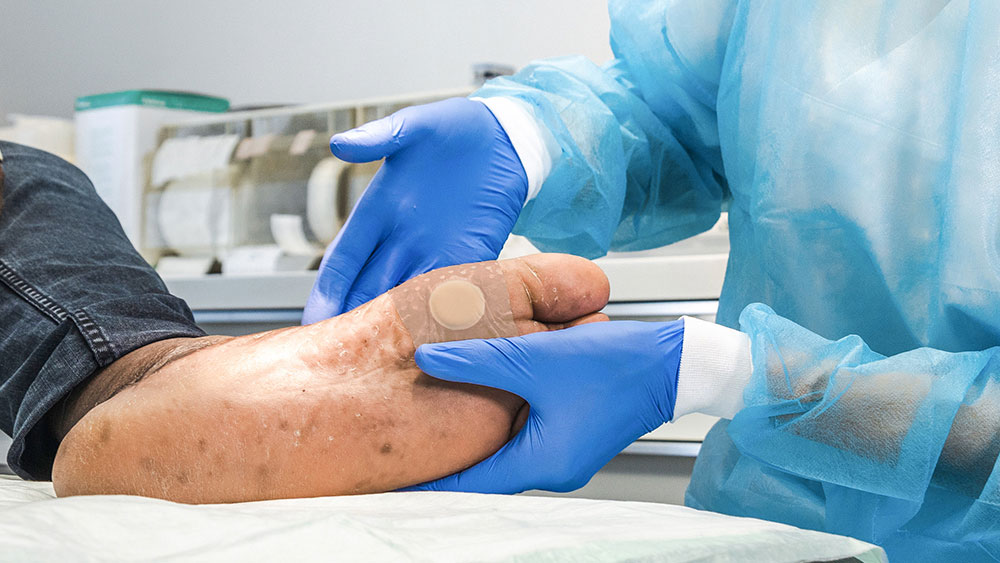
Près d’une personne diabétique sur quatre développera un ulcère du pied au cours de sa vie, ce qui en fait l’une des complications les plus courantes et les plus graves de la maladie5. Bien que le risque de complications, dont l’amputation, demeure élevé une fois l’ulcère installé, les ulcères du pied représentent une cause majeure de morbidité évitable chez les adultes diabétiques6. Ces constats soulignent l’importance d’une prise en charge globale, axée notamment sur la prévention des infections, afin d’améliorer la qualité de vie des patients7.
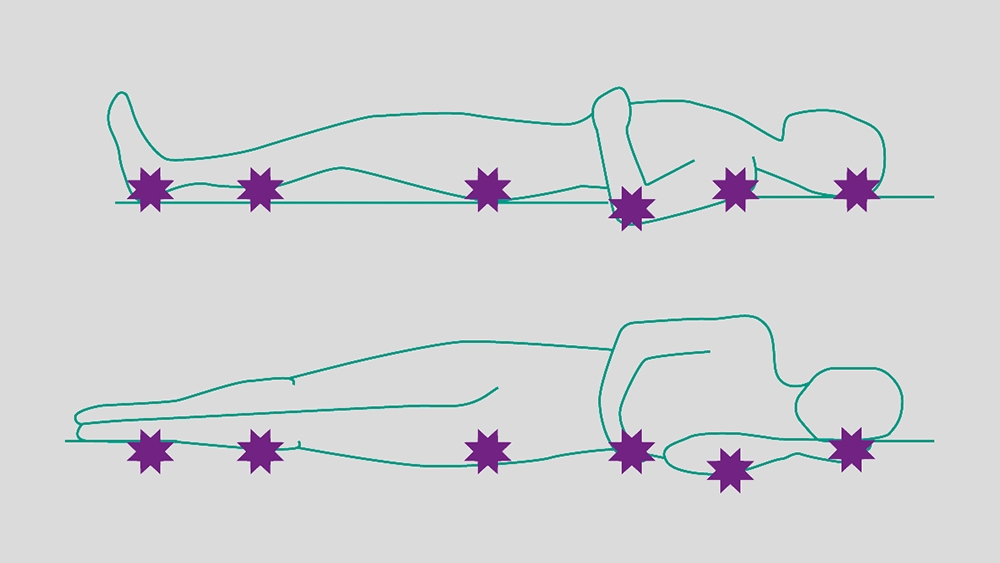
Les plaies de pression (aussi appelées escarres, plaies de lit ou ulcères de décubitus) réduisent considérablement la qualité de vie des patients, en limitant leur mobilité et en engendrant une détresse psychologique. Elles peuvent retarder la guérison et restreindre la participation sociale, en raison de l’exsudation, de la charge émotionnelle et de la perte d’autonomie, affectant ainsi le bien-être global, tant physique que psychologique8. Pour favoriser la guérison et prévenir d’autres complications, une prise en charge efficace doit s’attaquer à la charge bactérienne, faisant du nettoyage de la plaie un élément clé du traitement9.
Les brûlures figurent parmi les blessures les plus graves et les plus douloureuses, touchant particulièrement les populations vulnérables, comme les enfants, les personnes âgées et les personnes en situation de handicap. En 2019, plus de 8,3 millions de nouveaux cas de brûlures ont été recensés dans le monde, entraînant 111 292 décès, dont une grande proportion chez les enfants. Les conséquences des brûlures sont majeures, car la peau – le plus grand organe du corps – joue un rôle essentiel dans la protection, la régulation de la température et la santé globale. Un nettoyage rapide et rigoureux de la plaie est donc indispensable pour optimiser les résultats cliniques10.
* L’astérisque indique un champ obligatoire.
