No content results match your keyword.
Content

You have successfully logged out.


Chronic wound management
TIME is a global wound care framework used to implement appropriate care plans and promote wound healing.1 It is essential to assess the patient as a whole; wound bed preparation follows a care cycle that emphasizes treating the entire person, not just the wound itself.1
Effective wound management begins with accurate assessment. One of the most widely accepted clinical approaches is the TIME framework, a systematic method that helps healthcare professionals evaluate wounds and guide treatment decisions.1

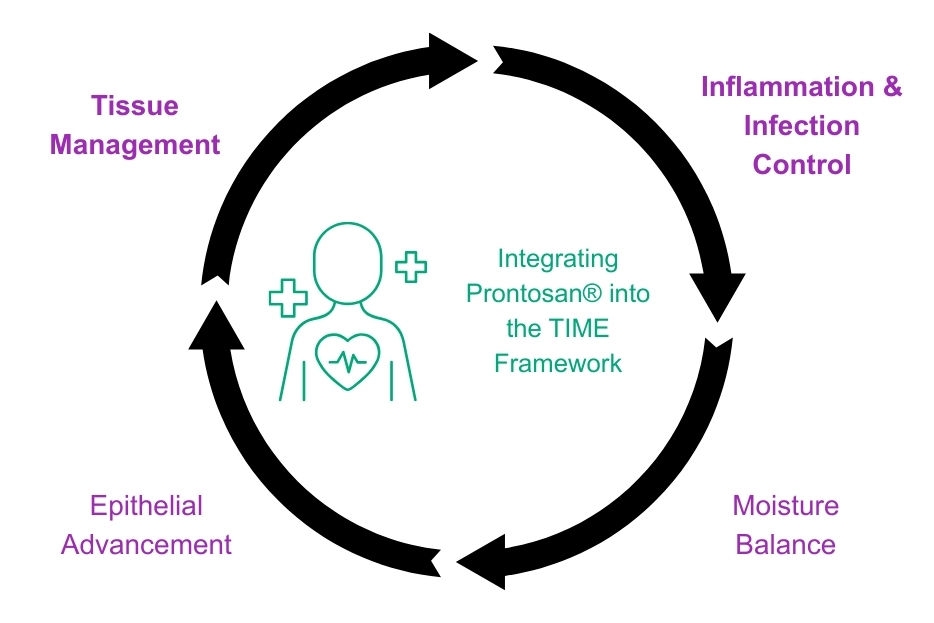
Prontosan® plays a key role in wound bed preparation by addressing two major barriers to healing: devitalized tissue (T) and biofilm‑associated bioburden (I). Its combination of betaine (a surfactant that loosens and removes debris, slough, and biofilm) and polyhexamethylene biguanide (PHMB) (a guanidine based polymer with broad spectrum antibacterial activity).3,4
This dual action aligns directly with the TIME framework: improving Tissue management by facilitating removal of slough and biofilm, and strengthening Infection Control by reducing bacterial burden and preventing biofilm reformation.
Prontosan® Wound Irrigation Solution demonstrates significantly higher efficacy compared to saline in reducing inflammatory signs and accelerating the healing of vascular leg ulcers and pressure ulcers, supporting the revision and update of chronic wound care protocols.5
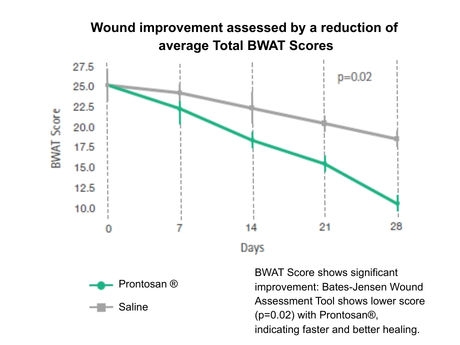 Data from the Prontosan® Wound Irrigation Solution vs. saline compendium, derived from Bellingeri et al. 2016.
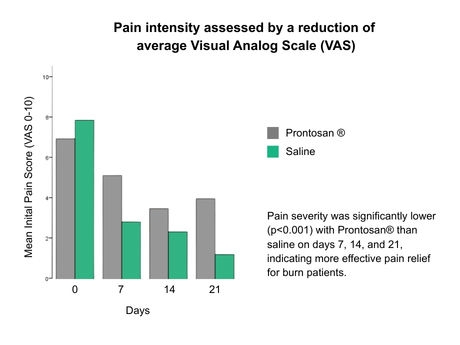 Data derived from Dahmardehei et al. 2025
Prontosan Wound Irrigation Solution and Prontosan Gel used sequentially can accelerate burn‑wound healing while reducing pain, infection, and exudate, improving patients’ quality of life, and supporting their use as safe and effective options in clinical protocols.6
Clinicians can determine whether a wound is healing or chronically infected by evaluating clinical signs using the NERDS and STONES framework, which differentiates superficial critical colonization from deep or surrounding infection.7
NERDS identifies signs of superficial bacterial burden within the wound bed:
STONES indicates deeper infection or infection spreading to surrounding tissue:
When several NERDS criteria are present, the wound may have critical colonization, meaning the infection remains localized to the wound surface and can be treated with topical antiseptics. The presence of STONES criteria suggests the infection involves deeper structures or surrounding tissue, often requiring systemic antimicrobials.
Infected wounds require proper cleansing and management to reduce bioburden and support healing. Prontosan® Wound Irrigation Solution and Gel are clinically shown to improve wound healing outcomes and effectively manage biofilm, helping create an optimal environment for recovery.5

